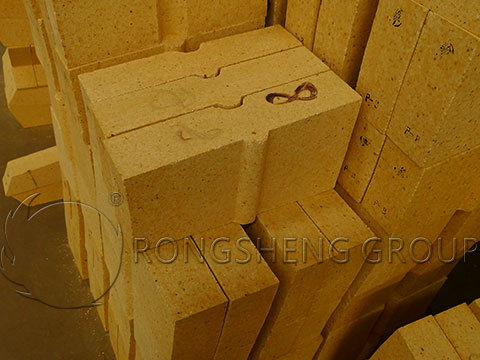
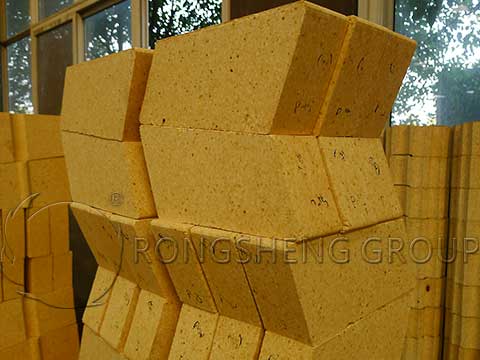
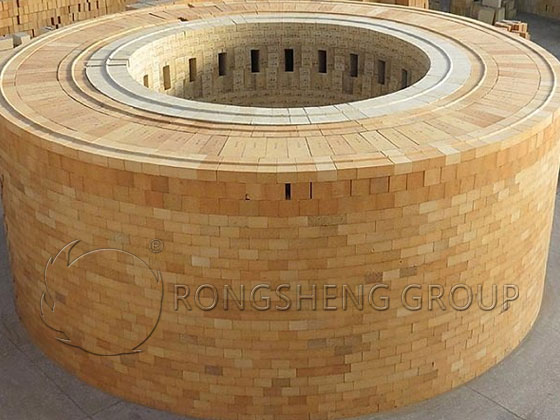
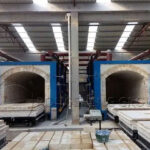
To achieve low-carbon, energy-efficient, and high-performance operation—characterized by elevated blast temperatures, extended service life, and large-scale capacity—in blast furnace hot blast stoves, increasingly stringent requirements have been imposed on the refractory materials utilized therein. Bauxite-based homogenized materials, produced through a process of homogenization and sintering, exhibit a uniform microstructure distribution as well as stable chemical and mechanical properties. Andalusite, for its part, possesses excellent chemical stability, volume stability, high-temperature mechanical strength, and thermal shock resistance. By incorporating andalusite into bauxite-based homogenized materials, the high-temperature performance of bauxite-based low-creep high-alumina bricks can be significantly enhanced and improved, thereby satisfying the rigorous service requirements for low-creep high-alumina bricks used in critical sections of hot blast stoves.
Factors Influencing the Properties of Low-Creep High-Alumina Bricks
Utilizing bauxite-based homogenized materials and andalusite as primary raw materials, this study investigates the effects of the andalusite addition form and sintering temperature on the properties of bauxite-based low-creep high-alumina bricks.
The raw materials employed include 55-grade andalusite, 80-grade bauxite-based homogenized material, and Guangxi white clay. During the sintering process, andalusite decomposes into mullite and amorphous SiO₂—or a high-silica glass phase (in the presence of impurities)—which then reacts with excess Al₂O₃ to form secondary mullite *in situ*. This process is accompanied by a certain degree of volume expansion, endowing the material with excellent creep resistance and thermal shock resistance. The bauxite-based homogenized material is manufactured using bauxite ore as the raw material, processed through a series of steps including batching, homogenization, fine grinding, forming, and high-temperature calcination; it is characterized by a dense and uniform microstructure, homogeneous chemical composition, and stable performance.
Test specimens were sintered at temperatures of 1450°C, 1500°C, and 1550°C. The Refractoriness Under Load (RUL) was determined, and creep rates were measured via compressive creep testing on specimens sintered at 1550°C. The following conclusions were drawn:
In bauxite-based low-creep high-alumina bricks, increasing the sintering temperature leads to an improvement in the Refractoriness Under Load (RUL).
The addition of andalusite to the bauxite-based homogenized material results in a significant increase in the Refractoriness Under Load (RUL).
In bauxite-based low-creep high-alumina bricks, incorporating andalusite in the form of fine powder yields better improvements in high-temperature performance compared to incorporating it in granular form.
The addition of andalusite to the bauxite-based homogenized material markedly enhances creep resistance, with the improvement effect achieved by andalusite fine powder being superior to that of andalusite granules.
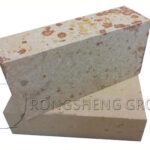
The andalusite contained within low-creep andalusite high-alumina bricks—much like sillimanite—exhibits excellent structural strength properties at high temperatures. The high-temperature creep rate of andalusite bricks is superior to that of bauxite, corundum, and most mullite bricks; consequently, andalusite is considered one of the ideal raw materials for low-creep refractory products.
The manufacturing process for andalusite high-alumina bricks is similar to that of standard high-alumina bricks, utilizing high-alumina bauxite, corundum, or mullite as the aggregate, supplemented by the addition of a specific proportion of andalusite.
In andalusite high-alumina bricks, the load-softening temperature and creep rate of the finished products follow specific patterns relative to the amount of added andalusite concentrate. As the proportion of added andalusite increases, the load-softening temperature of the product rises accordingly. When the andalusite addition level reaches 15%, the load-softening temperature attains approximately 1600°C.
The physicochemical properties of low-creep andalusite high-alumina bricks are significantly enhanced following the addition of andalusite to the high-alumina matrix. In the realm of high-alumina refractory materials, the incorporation of either pure andalusite or composite andalusite additives consistently yields exceptionally high values for high-temperature structural strength. Comprehensive research and experimental studies have concluded that when andalusite concentrate is added at levels of 15%–20% or 25%–30%, the load-softening temperature of the high-alumina products can be expected to reach 1600°C or 1700°C; however, these specific values may vary slightly depending on the distinct aggregate and matrix compositions of the high-alumina products in question.
There is a direct correlation between the amount of added andalusite and the load-softening temperature and creep rate of high-alumina products. The incorporation of andalusite into high-alumina products effectively elevates the load-softening temperature and reduces the creep rate (though the extent of this reduction may vary based on the inherent composition of the high-alumina product itself), thereby enhancing overall product performance and enabling these materials to serve more effectively in the high-temperature zones of industrial kilns and furnaces.
Low-Creep High-Alumina Bricks for Hot Blast Stoves
Selection of Low-Creep High-Alumina Bricks for the Intermediate-Temperature Zone of Hot Blast Stoves
The hot blast stove is a critical piece of equipment in blast furnace smelting operations; consequently, the refractory bricks utilized vary depending on the specific temperature conditions of each distinct zone. Traditional hot blast stove designs typically employ a combination of refractory materials—including silica, high-alumina, and clay-based bricks—tailored to the requirements of different sections. For instance, the intermediate-temperature zone of a hot blast stove is primarily constructed using low-creep high-alumina bricks. Why are low-creep high-alumina bricks specifically chosen for this zone, and how effective are they in practice?
Operating Environment of the Intermediate-Temperature Zone
The temperature range within the intermediate zone of a hot blast stove is relatively moderate, typically falling between 600°C and 1200°C. This zone encompasses areas such as the combustion chamber walls, the regenerator chamber walls, and the vicinity of the hot blast outlet—all of which serve as transitional regions where temperatures shift from high to low. A key characteristic of these areas is the significant temperature gradient they experience; therefore, when selecting refractory bricks for these zones, priority is given to low-creep high-alumina bricks that demonstrate excellent resistance to rapid thermal cycling (sudden heating and cooling).
Properties of Low-Creep High-Alumina Bricks
For the aforementioned intermediate-temperature zones, we primarily utilize low-creep high-alumina bricks known for their superior resistance to creep deformation. These bricks are manufactured using high-quality bauxite combined with premium “triple-sillimanite” refractory raw materials—specifically kyanite, andalusite, and sillimanite—which are then fired at high temperatures. During the firing process, these triple-sillimanite components undergo a double-stage mullitization transformation, ultimately forming a structurally stable mullite crystalline phase. This process endows the high-alumina bricks with exceptional resistance to creep under high-temperature loads.
Performance Results
The strategy of constructing the intermediate-temperature zones of hot blast stoves using low-creep high-alumina bricks has proven highly successful. Thanks to their excellent high-temperature performance, these bricks are able to effectively withstand and adapt to the fluctuating conditions of their operating environment. Over extended periods of service, they consistently maintain their structural integrity and performance stability, thereby effectively extending the overall service life of the hot blast stove.