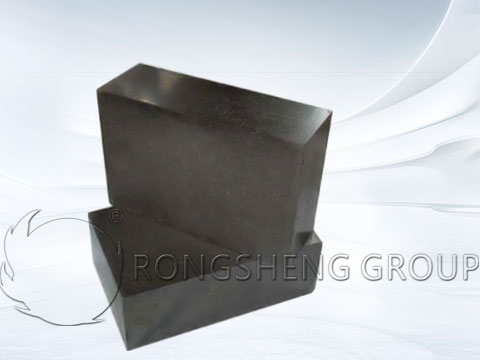
The performance requirements and application demands for refractory materials vary significantly depending on the specific type, size, and structural design of the glass-melting furnaces in use. In the glass industry—particularly for float glass furnaces—the primary categories of shaped refractory materials utilized are fused-cast refractories, silica bricks, and magnesia-based refractories. Silica bricks, a traditional staple among refractory materials for glass furnaces, are defined as refractory products containing a silicon dioxide (SiO2) content of 93% or higher. These bricks are manufactured using silica rock (quartzite) with an SiO2 content of at least 96% as the raw material; this is combined with mineralizers and binders, followed by a process involving mixing, molding, drying, and firing. Generally, the higher the SiO2 content in the raw silica material, the greater the refractoriness of the final product. Classified as acidic refractory materials, silica bricks exhibit strong resistance to acid corrosion. Furthermore, they are characterized by a high softening point under load, low density, and cost-effectiveness. Consequently, they are widely employed in various thermal equipment, including the carbonization chambers, combustion chambers, and partition walls of coke ovens; the melting tanks and crowns of glass furnaces; and the high-temperature load-bearing zones of hot blast stoves and carbon baking furnaces.
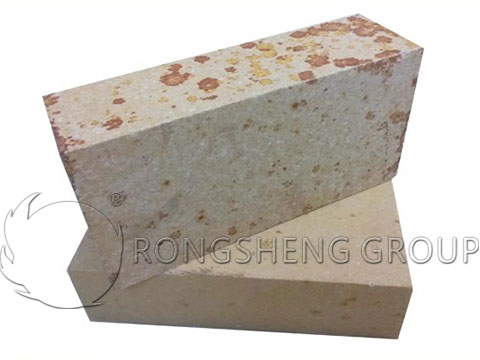
Silica Bricks for Glass Tank Furnaces
Silica bricks intended for glass tank furnaces are primarily utilized in the main arch of the melting chamber and in specific sections of the flame space; consequently, the quality of these silica bricks is critical to both the normal operation and the service life of the furnace. Since their inception, silica bricks have evolved through three distinct generations. The first generation consists of traditional, standard silica bricks. The second generation comprises “advanced” silica bricks, which—compared to their standard counterparts—are characterized by a set of “three highs and three lows.” The “three highs” refer to high purity (SiO2 content > 96%), a high load-softening temperature (> 1685°C), and a high content of tridymite and cristobalite (combined content > 90%). The “three lows” denote a low impurity content (Al2O3 + 2R2O ≤ 0.5%), a low true density (≤ 2.34 g/cm³), and a low residual quartz content (≤ 3%). The third generation represents an improved variant of the second-generation bricks. In this generation, the CaO content has been reduced from the original 2–3% to less than 1%; the content of alkali metal oxides has been further lowered to below 0.5%; the FeO content is kept below 0.2%; and the apparent porosity has been decreased from the 20–22% range typical of the second generation to 16–18%. While the production technology for silica bricks in my country is relatively mature, product quality remains inconsistent. With the development and widespread adoption of oxy-fuel combustion technology in glass furnaces, there is a growing demand for silica bricks characterized by even lower apparent porosity and a lower fusion index. Furthermore, to minimize the formation of “rat-holes” (localized erosion cavities) during operation within glass melting furnaces, the materials used must be manufactured with fewer structural defects and require the use of dense, tightly bonding refractory mortar within the expansion joints.
The Technological Level of Silica Bricks
Research into silica bricks in China began in 1954; however, until the late 1970s, both the research and production capabilities for silica bricks remained relatively underdeveloped—a deficiency primarily manifested in the poor quality of manufactured products and low yield rates. Subsequently, during the first phase of the Baosteel project, a complete suite of steelmaking technologies and equipment was imported from Japan; this initiative also led to the introduction of advanced silica brick technology specifically designed for coke ovens. After analyzing, assimilating, and absorbing the technology behind Japanese silica bricks, domestic researchers successfully developed and produced silica bricks for coke ovens in the late 20th century. These bricks featured a cristobalite content of 60%–70% (with levels reaching as high as 70% in specialized silica brick plants) and a residual quartz content of less than 1%. In contrast, other refractory material manufacturers—particularly those located in southern regions—continued to produce silica bricks with a significantly lower cristobalite phase (only 45%) and a higher residual quartz phase (reaching up to 3%). This disparity stems primarily from insufficient research into high-quality siliceous raw materials and processing techniques for silica bricks, as well as a lack of thorough mastery of the underlying production technology. Furthermore, siliceous raw materials vary widely across different regions, each possessing distinct physical, chemical, and petrological characteristics. Consequently, it is essential to conduct specific process-oriented research tailored to the particular siliceous raw materials being utilized in order to formulate a rational production workflow capable of yielding high-quality silica bricks.
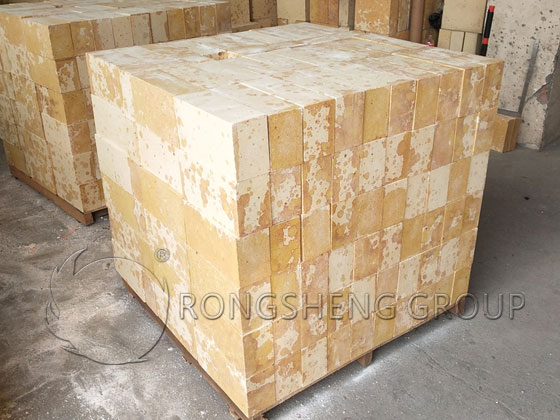
Problems Associated with the Application of Silica Bricks
Silica brick is an economical refractory material, yet it is also the material most susceptible to alkaline corrosion. While silica bricks are adequate for constructing the standard crowns of conventional glass melting furnaces, their service life in oxy-fuel furnaces plummets from 5–10 years to a mere 2–3 years, rendering them the weakest link in the furnace structure. “Rat-holing” or “upward drilling” constitutes the primary mode of degradation; furthermore, with the increasing use of alternative fuels and the widespread adoption of oxy-fuel combustion technology in glass melting furnaces, the operating environments to which silica bricks are subjected have become even more severe. Consequently, many researchers are seeking to utilize further improved versions of silica bricks in furnace zones where corrosive conditions are relatively mild. Conversely, in zones subject to severe corrosion, it is imperative to identify materials to replace silica bricks—such as fused-cast alumina refractories, fused-cast AZS refractories, and spinel bricks. Additionally, while my country’s refractory manufacturing processes have reached a sophisticated level, manufacturing equipment has emerged as a bottleneck constraining the industry’s further development. Many enterprises have come to realize that without modern equipment, it is impossible to produce superior products with consistent quality, and thus impossible to secure a position at the high end of the refractory industry value chain. Environmental protection remains a critical issue requiring serious attention within silica brick manufacturing enterprises, particularly regarding the control and prevention of occupational lung diseases such as silicosis.
New Manufacturing Processes Demand Continuous Improvement of Siliceous Materials
The “third generation” of high-quality silica bricks—referred to within the building materials industry as “premium-grade” silica bricks—exhibits variations in composition and performance tailored to specific applications. For instance, silica bricks designed for coke ovens are primarily used to construct the walls of regenerators, flues, combustion chambers, carbonization chambers, and furnace crowns. Because these bricks must withstand the static loads imposed by the upper masonry and equipment, the frictional forces generated during the mechanical charging of coal, and the thermal stresses resulting from high-temperature expansion during operation, coke oven silica bricks are required to possess a high refractoriness under load, high thermal conductivity, excellent thermal shock resistance, and superior volume stability at elevated temperatures.
Requirements for Silica Bricks in Modern Glass Melting Furnaces
- ① Strong resistance to corrosion, particularly against alkaline gases, as well as the corrosive effects of batch carryover, oil fumes, SO3, and NOx gases.
- ② Excellent high-temperature mechanical properties. Since gas temperatures within the glass melting pool can exceed 1615°C, the furnace crown—which bears gravity, mechanical stresses, and high-temperature loads—requires superior high-temperature strength.
- ③ Good volume stability at high temperatures.
- ④ High standards for masonry quality, requiring uniform joints and excellent structural integrity.
High-quality silica bricks designed and manufactured for use in glass furnace crowns, based on the above requirements, should exhibit excellent performance in the following aspects:
- ① High purity and density: SiO2 content greater than 96%; flux index (Al2O3 + 2R2O) less than 0.5%; FeO content less than 0.5%; high bulk density (greater than 1.9 g/cm³); and porosity less than 20%.
- ② High refractoriness under load: Under a load of 0.2 MPa, the softening point should exceed 1690°C.
- ③ Low reheat linear change: Less than 0.2% under conditions of 1500°C for 2 hours.
- ④ Good resistance to high-temperature creep: Less than 0.8% under conditions of 1550°C for 5 hours.
- ⑤ High cold crushing strength: Greater than 65 MPa at room temperature.
- ⑥ Specific mineral composition: Cristobalite content greater than 50%; tridymite content between 40% and 50%; residual quartz content less than 1%; and silicate glass phase content less than 3%.
- ⑦ Low true density: Less than 2.34 g/cm³.
Large-scale glass furnaces and oxy-fuel glass furnaces require high-purity, creep-resistant, and corrosion-resistant silica refractory materials.
In recent years, my country has achieved significant success in the cooperative production of silica bricks with international partners. In the past, the residual quartz content in Chinese-produced silica bricks typically exceeded 1%; however, the residual quartz content in silica bricks currently produced for export has dropped below 1%—with some even approaching zero—reaching advanced global standards. High-grade silica bricks were first manufactured in the mid-1980s using advanced technology introduced from the United States. After more than a decade of continuous assimilation, improvement, and refinement, production has reached a large scale, and these domestic products are now gradually replacing imported alternatives. Distinguished by its superior technical performance, this product extends the service life of glass melting furnaces from the previous 2–4 years to 5–8 years. Furthermore, it exhibits remarkable characteristics regarding thermal insulation and heat storage, as well as significant energy-saving and consumption-reducing capabilities; testing has confirmed that its physicochemical parameters meet advanced industry standards.
To meet the requirements for energy conservation, emission reduction, the development of a low-carbon economy, and structural adjustment, the glass industry must undertake process innovation. Consequently, silica bricks used in glass melting furnaces must possess high purity, low creep, and high corrosion resistance to satisfy these new technical process requirements.