Vertical ladle zinc smelting is an important zinc smelting process. The outer side of the vertical ladle furnace is in direct contact with a high-temperature flame of 1300-1340°C, while the inner side is in direct contact with zinc vapor and slag reaching up to 1200°C. It is subjected to high temperatures, oxidation, thermal shock, erosion, and chemical corrosion. Furthermore, periodic descaling is required to remove furnace nodules and accumulated iron, and the added coke is only around 800°C, subjecting the material to significant thermal stress. Currently, the service life of widely used clay-bonded silicon carbide bricks is approximately 20 months.

Silicon Nitride-bonded Silicon Carbide Refractory Bricks
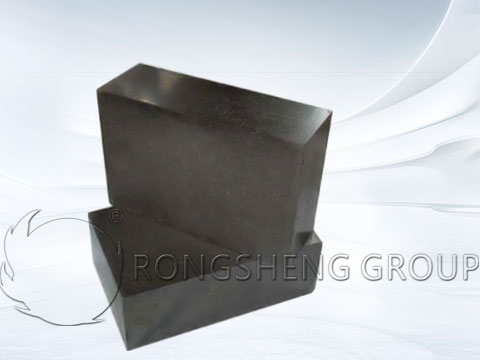
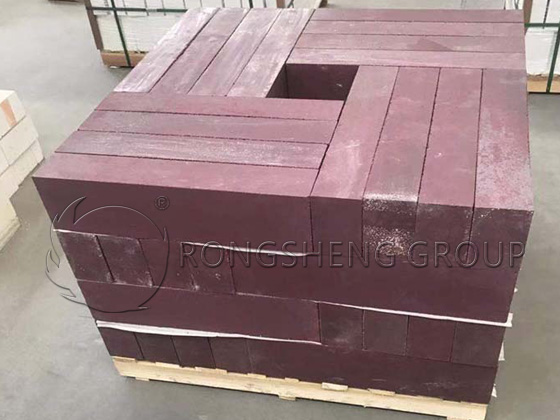
Silicon nitride-bonded silicon carbide refractory bricks possess advantages such as high thermal conductivity, corrosion resistance, and erosion resistance. Since December 2019, a zinc industry has successively used silicon nitride-bonded silicon carbide bricks to replace clay-bonded silicon carbide bricks in seven vertical zinc smelting furnaces.
- (1) Compared with clay-bonded silicon carbide, silicon nitride-bonded silicon carbide has higher thermal conductivity, resulting in a temperature reduction of approximately 30 °C in the high-temperature zone during service.
- (2) Silicon nitride-bonded silicon carbide exhibits stronger erosion resistance than clay-bonded silicon carbide; after 20 months of service, the residual brick thickness in the high-temperature zone is 40-50 mm greater than that of clay-bonded silicon carbide.
- (3) During service, silicon nitride-bonded silicon carbide bricks continuously develop leaks and long cracks due to insufficient release of thermal stress. This problem can be mitigated to some extent by adjusting the temperature regime during ore preparation. If a more efficient leak repair technology can be developed in the future, it is expected to improve the service life of silicon nitride-bonded silicon carbide bricks.
The R&D team has been researching silicon nitride-bonded silicon carbide products since 1984. Based on market demand, they have continuously developed various new silicon carbide products, which are widely used in industries such as steel, non-ferrous metal smelting, kilns, chemicals, and environmental protection.
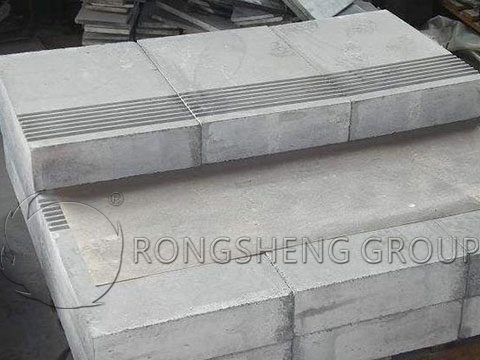
Application of Silicon Nitride-Combined Silicon Carbide in Vertical Tank Zinc Smelting
Addressing the problems encountered in the initial application of silicon nitride-combined silicon carbide in vertical tank zinc smelting, optimizations were made in several aspects, including adjusting the thermal regime, adjusting material composition, optimizing brick type, and improving the spraying method. Specific measures are as follows:
- Adjusting the Thermal Regime. The thermal regime during the suspension ore operation was adjusted, reducing the heating rate and extending the heating time, thus resolving the issue of long cracks easily occurring during suspension ore operations.
- Adjusting Material Composition to Improve Thermal Shock Resistance. Increasing the proportion of coarse silicon carbide particles reduced the product density. Introducing appropriate liquid-phase buffering of thermal stress and micro-crack repair theory significantly improved the thermal shock resistance of the product. Simultaneously, the increased coarse particle content significantly improved the interfacial bonding between the brick surface and the sprayed repair material, which is more beneficial for subsequent leak repair.
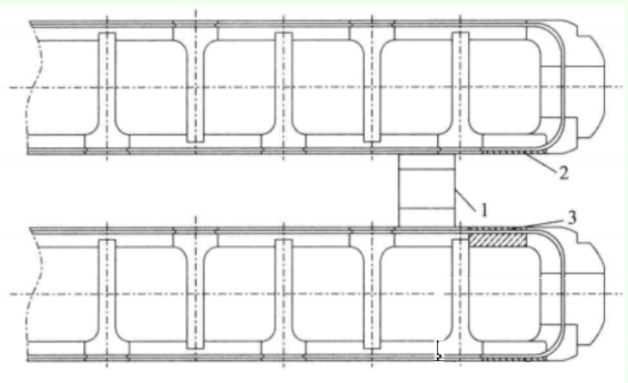
- Optimizing Brick Type and Masonry Structure Design. Curved expansion joints were introduced, and the size of the expansion joints was appropriately increased. When the vertical tank masonry is subjected to thermal stress during use, the original design was altered, leading to a concentration of thermal stress and the propagation of microcracks. However, the overall structure remained stable.
- Improved Spraying Method. The original wet spraying method for repairing leaks was optimized to pyrotechnic spraying, and suitable raw materials and specialized spraying equipment for pyrotechnic spraying were developed.
In recent years, based on its original leading product, silicon carbide refractory materials for aluminum electrolytic cells, the technical team has successively developed the GXJ series of multiphase nitride-bonded silicon carbide refractory materials for dry quenching furnaces. These materials are highly suitable for the harsh operating conditions of dry quenching furnaces (especially in the inclined chute area), including large temperature fluctuations, long-term material impact, airflow and dust erosion, and chemical corrosion. This effectively extends the lifespan of dry quenching furnaces (achieving 4 years of maintenance-free operation, 6 years without major overhaul, and an expected lifespan of up to 8 years). The newly developed series of silicon carbide products for waste-to-energy incineration possesses excellent properties such as high thermal conductivity, anti-coking, anti-erosion, and anti-oxidation, and is the first domestic product to obtain European certification for waste-to-energy incineration. Currently, it is being used in approximately 20 waste-to-energy incineration projects worldwide. The newly developed high-performance silicon carbide pusher plates for heavy-duty pusher kilns have significantly improved the stability and overall service life of silicon carbide pusher plate materials. The developed high-performance silicon carbide refractory materials for submerged arc furnace inlets are widely used in the inlet sections of major domestic manufacturers of silicon-calcium furnaces, silicon-manganese furnaces, and calcium carbide furnaces, with an overall service life increase of more than 2 times. The newly launched ZR series of nitride-bonded silicon carbide products for vertical zinc smelting furnaces has achieved successful large-scale application and shows promising prospects for further promotion. The newly developed CT series composite ceramic liners for coke ovens replace the original heat-resistant alloy liners, featuring green emission reduction, long service life, enhanced safety, and simple operation and maintenance, representing the mainstream development direction for the future of the coking industry.