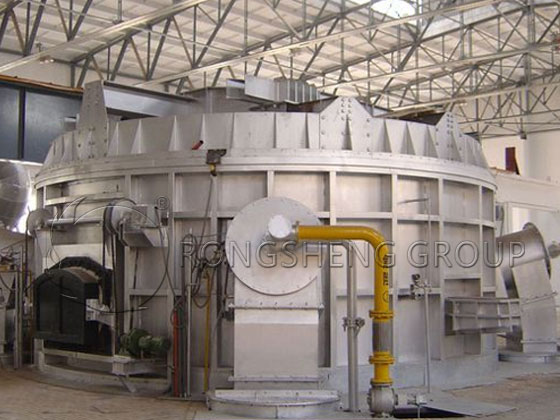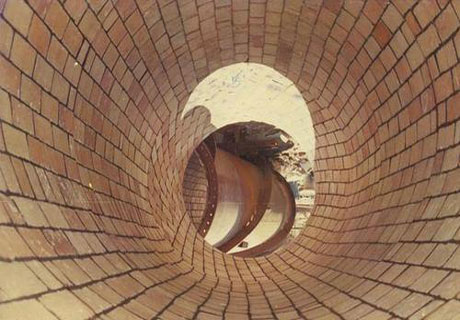
Kilns are the “heart” of industrial production, and high-alumina bricks are the “armor” protecting this heart. Choosing the wrong bricks can lead to frequent kiln shutdowns and soaring costs, or even kiln lining collapse and safety accidents. However, faced with the wide variety of high-alumina bricks on the market, many people don’t know where to start. Today, Rongsheng Refractory Materials Manufacturer will guide you step-by-step in selecting the right high-alumina bricks for your kiln, considering four key dimensions: grade, performance, kiln operating conditions, and tips for avoiding common pitfalls!
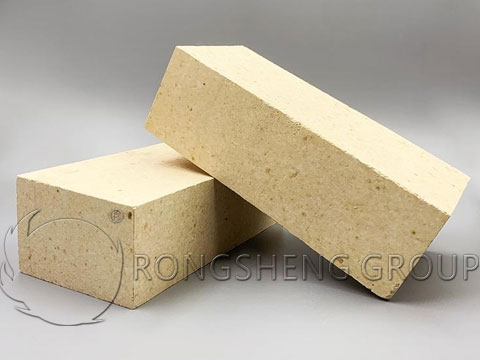
High-Alumina Brick “Performance Grading” at a Glance
The core classification standard for high-alumina bricks is the alumina (Al₂O₃) content. The higher the content, the stronger the high-temperature resistance and corrosion resistance, and the higher the price. In my country, there are four mainstream grades, suitable for different operating conditions:
High-grade high-alumina brick
Al₂O₃ > 85%, refractoriness exceeding 1790℃, excellent high-temperature resistance and slag resistance. Suitable for critical high-temperature and highly corrosive components such as electric arc furnace covers, slag lines in steel ladles, and special ceramic kilns.
Grade 1 High-Alumina Brick
Al₂O₃ 75%-85%, refractoriness 1790℃, high high-temperature strength. Suitable for core high-temperature zones above 1600℃, such as blast furnace waist/belly, high-temperature zones of hot blast stoves, and firing zones of cement kilns.
Second-Grade High-Alumina Brick
Al₂O₃ 60%-75%, refractoriness 1770-1790℃, excellent cost-performance ratio. Suitable for general medium-high temperature applications such as transition zones of cement rotary kilns, regenerators of glass kilns, and the middle section of hot blast stoves, etc., at temperatures between 1400-1600℃.
Grade 3 high alumina brick
Al₂O₃ 48%-60%, refractoriness 1750-1770℃, economical and practical. Suitable for preheaters, flues, lower parts of hot blast stoves, and other low-temperature, lightly corroded areas at 1300-1400℃; can also be used as a backing insulation layer.
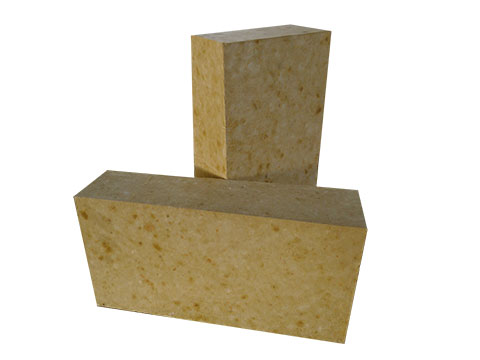
Four Core Indicators Determine Brick Lifespan
Grade is fundamental, but physical and chemical properties are key to judging the quality of high-alumina bricks. When purchasing, be sure to check these four items:
- 1. Room Temperature Compressive Strength: ≥60MPa. The higher the value, the stronger the impact and wear resistance, preventing cracking and spalling caused by furnace charge impact.
- 2. Apparent Porosity: ≤20%. Fewer pores mean better slag and penetration resistance, preventing molten slag from penetrating the brick body and damaging its structure.
- 3. Load Softening Temperature: ≥1450℃. Not easily deformed or collapsed at high temperatures, ensuring long-term stable operation of the kiln.
- 4. Thermal Shock Stability: ≥15 cycles of water cooling at 1100℃. Not easily cracked under frequent temperature fluctuations, suitable for kilns with frequent start-ups and shutdowns and large temperature differences.
Selecting bricks based on kiln operating conditions: Zoned brick selection is the most cost-effective.
Different kilns, and even different parts of the same kiln, experience vastly different temperatures and degrees of erosion. Zoned selection is the core principle for reducing costs and extending lifespan.
Cement Kiln
- Firing Zone (1400-1600℃, strongly alkaline erosion): Select Grade 1 high-alumina bricks, alkali-resistant and thermal shock-resistant.
- Preheater/Decomposer (800-1200℃, mild erosion): Select Grade 3 high-alumina bricks, economical and suitable.
Blast Furnace
- Bowl/Blouse (1200-1500℃, slag erosion + gas scouring): Select Grade 1 low-creep high-alumina bricks, creep-resistant and spalling-resistant.
- Body/Throat (800-1200℃, primarily wear-prone): Select Grade 2 high-alumina bricks, wear-resistant and durable.
Glass Kiln
- Regenerator (1300-1500℃, molten glass erosion): Select Grade 1/Grade 2 high-alumina bricks, erosion-resistant and high-temperature resistant.
General Principles
Higher temperatures and stronger erosion require high-grade, high-density bricks.
For non-critical low-temperature areas, use lower-grade bricks to reduce costs.
For areas with large temperature fluctuations, prioritize Grade II/Grade I bricks with good thermal shock resistance.
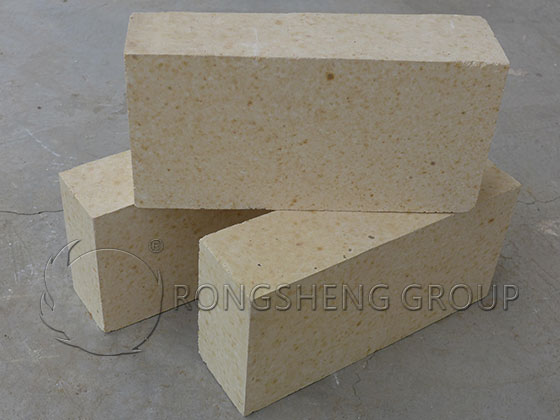
Common Selection Mistakes to Avoid
Focusing solely on Al₂O₃ content while ignoring other indicators: Even with the same Al₂O₃ content, differences in density and porosity can result in vastly different lifespans; a complete physicochemical report must be verified.
Using the same high-grade bricks throughout the furnace: Use Grade I bricks in core areas and Grade III bricks in non-critical areas; zoned selection can save up to 30% in costs.
Choosing inferior bricks for cheap prices: Low-priced bricks contain more impurities, are prone to deformation at high temperatures, and require frequent furnace shutdowns for maintenance, ultimately resulting in more harm than good.
Ignoring manufacturer strength: Prioritize manufacturers with formal testing reports and mature processes to avoid purchasing substandard products.
High-alumina bricks should be used with caution in the following scenarios:
Using anti-spalling high-alumina bricks containing 6-10% zirconium for the main arch in a horseshoe-flame water glass furnace at 1450℃ is a high-risk choice, as corrosion will be extremely severe, and its use is not recommended.
This is because the alkaline volatiles emitted during water glass production will react violently with components such as silica in the high-alumina bricks, generating low-expansion substances such as nepheline (which expands rapidly and damages the structure). Simultaneously, although the zirconium oxide (ZrO2) within the bricks can resist alkaline corrosion, 1450℃ is close to the material’s upper limit, and the brick’s load softening temperature (usually between 1470℃ and 1520℃) becomes a fatal weakness. This material may experience severe corrosion and structural spalling within 6 months.
The core logic for selecting high-alumina bricks
First, determine the operating conditions (temperature, corrosion, fluctuations) → Then select the grade → Verify performance indicators → Zonal configuration → Reliable manufacturers. There is no best high-alumina brick, only the most suitable one! Proper selection of equipment can avoid wasting costs by using oversized materials and prevent malfunctions caused by using undersized materials, thus ensuring the long-term efficient operation of the kiln.