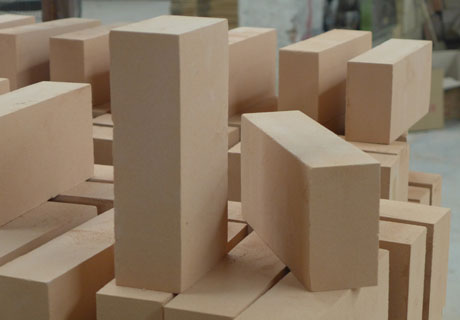
The selection of furnace wall materials for waste heat boilers is of great significance in furnace wall design. Based on the materials constituting the furnace wall, furnace wall materials include refractory materials, insulation materials, sealing materials, and filling materials.
Refractory materials for waste heat boiler furnace walls refer to non-metallic materials with a refractoriness of 1580℃ or higher. These include natural ores, products manufactured according to specific processes, and various bulk materials, all designed for intended use. Furnace wall refractory materials can be classified into shaped refractory materials, unshaped refractory materials, and unshaped insulating refractory materials, among others.
Shaped Refractory Materials
Shaped refractory materials are products made by combining refractory aggregates and powders with binders or additives into a mixture, processing it into a blank with a specific shape, size, and strength using external force and molds, and then sintering it at high temperatures. They can be divided into two types: shaped refractory products and shaped insulating refractory products. The working environment for shaped refractory products should be (50-100)℃ lower than the load softening temperature. The working environment for shaped insulating refractory products should be (100-150)℃ lower than their reheat linear change test temperature.
Shaped Refractory Products
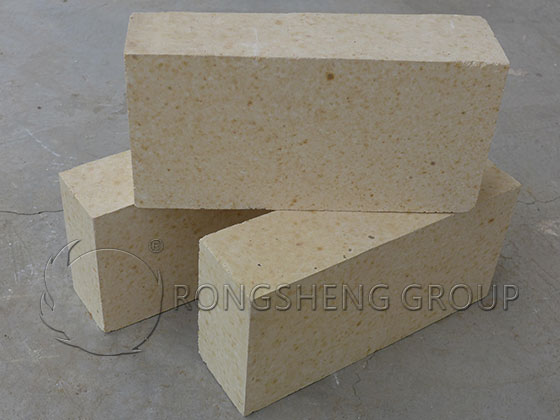
Shaped refractory products are generally classified into clay-based, high-alumina, silicon nitride-bonded silicon carbide products, and high-strength wear-resistant bricks. Different furnace types have different requirements for refractory materials, and appropriate materials can be selected accordingly. Clay-based products are generally used as linings for heavy-duty furnace walls or lightweight frame brick-built furnace walls. High-alumina products are suitable for higher-temperature areas, such as furnace wall linings or furnace bottom walls. Silicon nitride-bonded silicon carbide products are suitable for the linings of circulating fluidized bed boilers, i.e., areas severely subjected to pulverized coal erosion and abrasion. Wear-resistant bricks are suitable for the linings of circulating fluidized bed boilers and high-temperature and abrasion-prone areas.
Shaped Insulating Refractory Products
Generally, shaped insulating refractory products are divided into clay insulating refractory bricks, high-alumina insulating refractory bricks, and diatomaceous earth insulating products. They are used as the insulation layer of boiler furnace walls, serving as an inner lining protected from molten slag and gas erosion; typically, these products have low strength. Diatomaceous earth products are also used as insulation layers for equipment and pipelines.
Shaped refractory products are constructed using refractory mortar. Refractory mortar is composed of refractory powder with a specific particle size ratio, binder, and additives, mixed with water or a suitable liquid to form a slurry. Its composition varies depending on the shaped refractory material.
Unshaped Refractory Materials
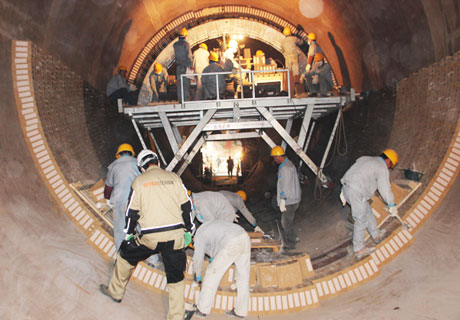
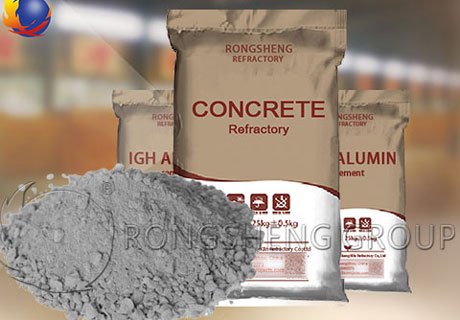
Unshaped refractory materials are mixtures composed of refractory aggregates, powders, and binders or additional additives. They can be used directly without molding and sintering, or after being mixed with appropriate liquids, and can be formed into products of any shape. Unshaped refractory materials are classified according to different construction methods into refractory castables, refractory plastics, refractory ramming mixes, and refractory mortars. Appropriate unshaped refractory materials are selected based on the requirements of different types of boilers and furnace wall components. The service temperature of unshaped refractory materials must be lower than the test temperature for the linear shrinkage rate after firing.
In power plant boilers, especially large-capacity units, shaped refractory materials are rarely used and are gradually being replaced by unshaped refractory materials, which are easier to construct and operate.
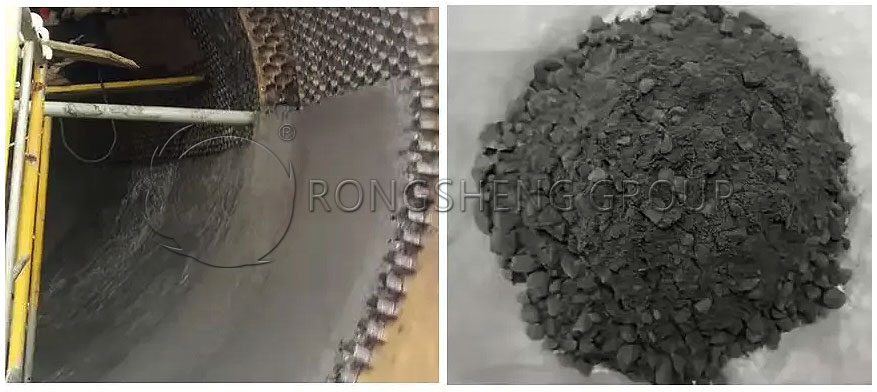
Refractory Castables
Refractory castables are granular and powdered materials made from refractory materials, mixed with a certain proportion of binders and water. They are materials with good fluidity and are formed by casting. Refractory castables are generally classified according to their binders into silicate cement refractory castables, slag cement refractory castables, high-alumina cement refractory castables, low-calcium aluminate cement refractory castables, phosphate high-alumina refractory castables, and water glass refractory castables. To improve performance, refractory castables with added steel fibers have also been developed.
- 1) Silicate Cement Refractory Castables. Silicate cement refractory castables use silicate cement as the binder. The aggregates and powders are selected from hard clay clinker or high-alumina bauxite clinker. Silicate cement refractory castables are suitable for use as the inner layer of frame-type and tube-type furnace walls, as well as for the lining of medium and low temperature sections of the furnace, and for equipment such as ash chambers and flues.
- 2) Slag Cement Refractory Castables. Slag cement refractory castables use slag cement as the binder.
- 3) High-alumina cement refractory castable: This type of castable uses high-alumina cement as a binder. The aggregate and powder used must comply with relevant regulations for the production of aggregates and powders from high-alumina clinker. Slag cement refractory castables are suitable for lining medium- and low-temperature sections of furnaces and equipment such as flues.
- 4) Low-calcium aluminate cement refractory castable: This castable uses low-calcium aluminate cement as a binder. The aggregate and powder used are hard clay clinker or high-alumina bauxite clinker, and must comply with relevant regulations. It is used for the inner layer of frame-type and pipe-type furnace walls, high-temperature zones within the furnace, and linings of equipment such as ash chambers and slag hoppers.
- 5) Low-calcium aluminate cement refractory castable: This castable uses low-calcium aluminate cement as a binder. The aggregate and powder used are premium-grade or first-grade bauxite clinker, and their properties must comply with regulations for the production of aggregates and powders from high-alumina bauxite clinker. It is mainly suitable for areas within the furnace with high requirements for high-temperature performance, slag erosion resistance, and thermal shock resistance. 5) High-alumina phosphate refractory castable. This castable uses phosphoric acid or aluminum phosphate solution as a binder. The phosphoric acid is industrial orthophosphoric acid with a concentration >85%, and the aluminum hydroxide is an industrial grade zero product. The aggregate should comply with the relevant regulations for aggregates and powders made from high-alumina bauxite clinker. It is mainly used for linings of equipment requiring high-temperature performance and thermal shock resistance in furnaces.
- 6) Water glass refractory castable. Water glass refractory castable uses water glass solution as a binder. The modulus of water glass is 2.3-3.0, and the relative density is not less than 1.36. The aggregate and powder are hard clay clinker or high-alumina bauxite clinker. Water glass refractory castable is suitable for linings in medium and low temperature parts of furnaces, as well as flues and furnace roofs.
- 7) Steel fiber reinforced refractory castable. To meet the requirements of higher strength and better stability, an appropriate amount of steel fiber is added to the castable. The fibers are made of heat-resistant stainless steels with high chromium and nickel content, such as 1Cr18Ni9Ti and 1Cr15Ni3BW3Ti. The typical size is φ0.5mm × 20mm. They are suitable for linings in areas requiring high tensile strength and thermal shock resistance, such as flame deflectors and furnace arches.
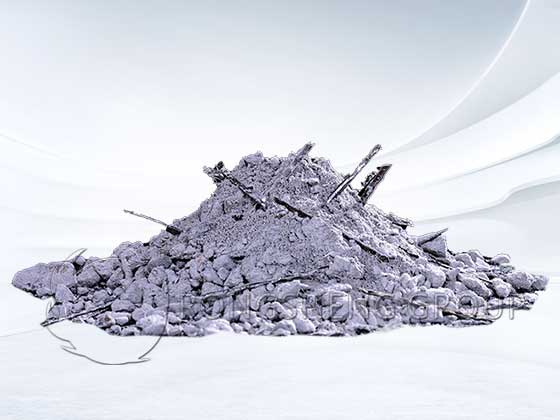
Refractory Plastics
Refractory plastics are made by mixing granular or powdered refractory materials with a certain proportion of plastic clay and chemical composite binders, resulting in a paste-like or dry-mixed form. They exhibit good plasticity during use and are shaped by ramming and extrusion. Refractory plastics are classified into two types based on the binder: phosphate plastics and water glass plastics.
- 1) High-alumina phosphate refractory plastics. High-alumina phosphate refractory plastics use phosphoric acid solution as a binder. The phosphoric acid solution concentration is (1.26~1.306) g/cm³, and the dosage is 9%~11%. The refractory material has an Al₂O₃ mass fraction ≥82% and an Fe₂O₃ mass fraction ≤5%. It is suitable for the lining of the furnace bottom of cyclone furnaces and liquid slag discharge furnaces, and high-temperature parts such as the combustion zone of coal-fired furnaces.
- 2) Rapid-hardening water glass refractory plastics. Rapid-hardening water glass refractory plastics use water glass as a binder. The refractory material contains >55% Al2O3 by mass, and has a refractoriness ≤1750℃. The water content for dry mixing is generally 9% to 11%. It is suitable for the inner layer of boiler tube furnace walls, furnace roof and flue equipment lining, and can also be used in high-temperature parts of circulating fluidized bed boilers.
Refractory ramming mix
Refractory ramming mixes are materials made from granular and powdered refractory materials, mixed with a certain proportion of binders and additives, and shaped by mechanical or manual ramming. A commonly used type is aluminum phosphate silicon carbide refractory ramming mix. It uses aluminum phosphate solution as a binder, where the phosphoric acid is industrial orthophosphoric acid with a mass fraction of 85%, the aluminum hydroxide is an industrial grade zero product, and the silicon carbide has a crystalline structure with a mass fraction of 97%. The impurity component, Fe2O3, has a mass fraction of <1.5%.
It is suitable for areas of severe coal ash impact and abrasion in cyclone furnaces, liquid slag discharge furnaces, and circulating fluidized bed boilers, as well as high-temperature zones such as the combustion zone of coal-fired boilers.
In modern boiler furnace walls, unshaped refractories have gradually replaced shaped refractories because they have several significant advantages, such as good integrity, convenient construction, easy sealing, and convenient inspection and maintenance. However, unshaped refractories also have disadvantages, such as lower strength compared to shaped refractories.
Currently, based on existing unshaped refractory materials, special components are added to meet the requirements of furnace walls in different types or locations. For example, high-alumina bauxite clinker with wear-resistant raw materials such as corundum and silicon carbide as aggregates, combined with powdered or liquid binders and several additives, is formulated into a high-temperature wear-resistant plastic. It is suitable for furnace wall refractory layers that operate at relatively low temperatures (around 800℃), are directly exposed to fire, are severely eroded by flue gas and coal ash, and require high strength. Examples include cyclone separators in circulating fluidized bed boilers, furnace wall linings, and areas severely impacted and worn by coal ash.
Some furnace walls require high resistance to high temperatures, coal erosion, and abrasion, and wear-resistant castables can be used. These are formulated with high-alumina bauxite clinker, corundum, silicon carbide, and other wear-resistant raw materials as aggregates, aluminate cement as a binder, and several additives. Wear-resistant castables require casting or vibration molding.
Unshaped Insulating Refractory Materials
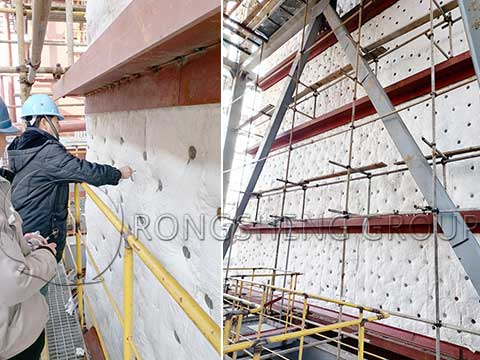
Unshaped insulating refractory materials, also known as lightweight refractory castables, are made from materials such as lightweight refractory brick particles, porous clinker, hollow spherical ceramsite, expanded perlite, limestone, and diatomaceous earth brick particles, using cement or water glass as a binder. They are generally used as insulation layers or fillers for furnace walls, where temperature requirements and load-bearing capacity are not high, and their application locations are not directly exposed to fire or flue gas. The service temperature of unshaped insulating refractory materials should be at least 50°C lower than their permissible service temperature.