Hazardous waste incineration is an emerging field characterized by a complex and diverse range of waste types, which exhibit significant variations in material properties and calorific values. Consequently, the lining designs for rotary kilns and secondary combustion chambers used in hazardous waste incineration are highly varied to meet specific operational requirements. Compared to conventional high-temperature industrial kilns, the degradation of refractory materials in hazardous waste incineration rotary kilns is primarily concentrated within the kiln body itself. Therefore, the selection of refractory materials should be guided by a careful assessment of the specific characteristics of the hazardous waste and the operational conditions (such as incineration temperatures and flue gas composition).
Treatment Processes and Refractory Material Selection for Hazardous Waste Incineration
Hazardous waste incineration involves several typical treatment processes, each requiring a specific selection of refractory materials.
-
Processing Materials with High Moisture Content
When the moisture content of the feed material is high, the refractory materials at the feed end are subject to severe thermal spalling. Refractories with excellent thermal shock resistance—such as those based on mullite, corundum-mullite, or corundum-silicon carbide—are suitable for this zone.
-
High-Volume Liquid Waste Processing with Poor Atomization
Liquid waste is typically introduced at the kiln head via an atomizing lance, with incineration primarily occurring in the drying zone. If the atomization is poor—often due to equipment issues—the refractory materials in this area may suffer from spalling and damage. Mullite, corundum-mullite, or corundum-silicon carbide refractories are also appropriate here. During operation, the frequency of inspections for the atomization equipment should be increased, and it is advisable to keep the volume of liquid waste below 30% of the total feed.
-
Processing Large Quantities of Hard Materials (e.g., Metal Drums)
Materials such as metal drums are highly rigid. Given the slow rotation speed of the rotary kiln, these items tumble repeatedly inside, causing significant mechanical wear in the feed zone. In this case, high-strength, wear-resistant corundum-silicon carbide refractories provide excellent performance.
-
Materials with High Concentrations of Low-Melting-Point Salts
When the content of potassium (K) or sodium (Na) salts exceeds 5%, the material’s melting point drops, leading to the formation of high-temperature molten slag. This slag can severely penetrate and erode the refractory lining. In such environments, chrome-zirconium-corundum refractories—typically containing 3% to 10% Cr₂O₃—are the most suitable choice for high-temperature zones.
-
Materials with High Fluorine Content
When the fluorine content in the feed reaches 1%–4%, the fluorine reacts readily with the silicon (Si) components in the refractory materials to form silicon tetrafluoride (SiF₄) gas. This process destroys the matrix structure of the lining, leading to rapid erosion. The impurity content in refractory materials—especially the silicon dioxide (SiO₂) content—must be strictly controlled; using chrome-corundum materials with a Cr₂O₃ content of 9–15% can meet the requirements for the normal operation of a rotary kiln.
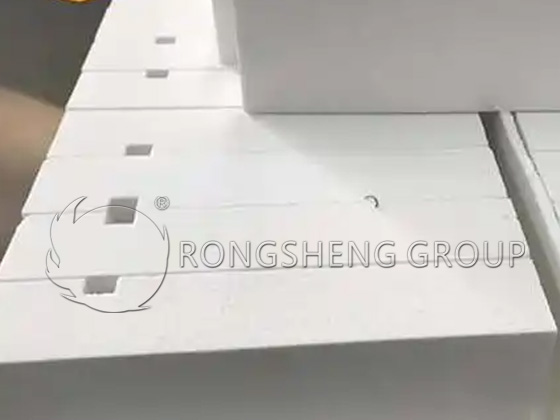
Selection of Refractory Materials for Hazardous Waste Incinerators
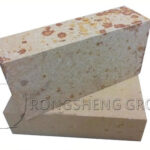
The selection of refractory materials for hazardous waste incinerators is based on matching the chemical properties of the refractories with those of the corrosive media present; selecting materials with similar or compatible chemical characteristics helps ensure sufficient resistance to corrosion. Alumino-silicate refractories are based on the Al2O3-SiO2 binary system and include products such as silica bricks, quartz glass, fireclay bricks, high-alumina bricks, and corundum bricks. High-alumina bricks consist mineralogically of corundum, mullite, and a glassy phase; they are classified by their Al2O3 content, with those containing ≥90% Al2O3 (by mass) designated as corundum bricks. Such bricks are widely used as refractory brick linings for rotary kilns in hazardous waste incineration facilities.
- 1) Appropriate apparent porosity. Apparent porosity refers to the ratio of the volume of all open pores in a refractory material to its total volume. A higher apparent porosity indicates a greater number of open pores, which facilitates the penetration of substances into the material, thereby accelerating corrosion. While porosity should generally be kept low, it is important to note that excessively low porosity can negatively affect thermal insulation performance. Currently, the apparent porosity of refractory bricks used domestically is typically controlled at around 20%.
- 2) Good thermal stability and a sufficiently high refractoriness under load. Refractory materials must possess adequate thermal stability and a high refractoriness under load—meaning they should not soften or melt at high temperatures, and must retain their structural integrity without deforming or collapsing under significant mechanical loads or other thermo-mechanical stresses.
- 3) Good resistance to slag corrosion and high chemical stability. At the high temperatures found within a kiln, the liquid phase of clinker and molten fuel ash exhibit strong chemical corrosivity. Consequently, refractory materials must demonstrate excellent resistance to slag corrosion and high chemical stability to minimize thinning caused by the kiln environment and to extend the service life of the refractory lining. Refractory bricks are lined inside a rotary kiln used for incineration to mitigate the direct damage caused by high temperatures and corrosive substances during the incineration of hazardous waste. Consequently, the selection of refractory materials requires not only precise dimensions but also an appropriate apparent porosity, good thermal stability, a sufficiently high load-softening temperature, strong resistance to slag erosion, and chemical stability.
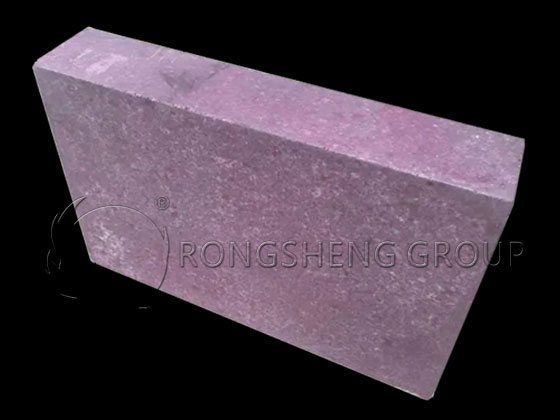
Selection of Refractory Materials for Various Components of Rotary Kiln Hazardous Waste Incinerators
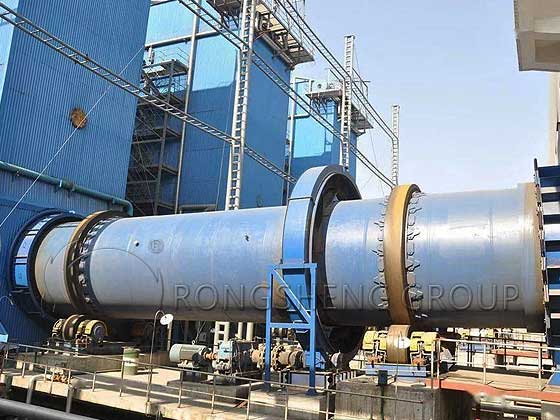
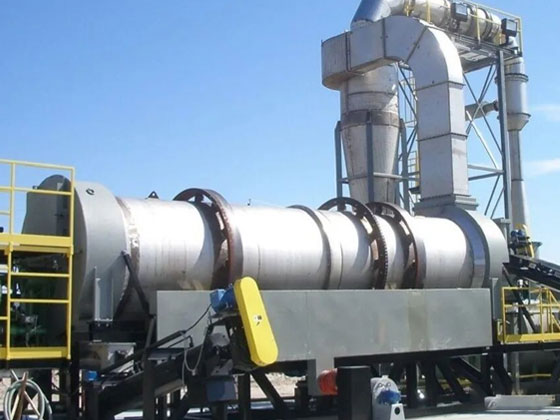
A rotary kiln incinerator is a specialized system for hazardous waste incineration, comprising a rotary kiln, a secondary combustion chamber, a waste heat boiler, a quenching tower, and acid gas removal and dust collection systems. Pre-treated hazardous waste is fed into the combustion system via various methods. Driven by gravity and the continuous rotation of the kiln, the waste comes into full contact with combustion-supporting air, undergoing drying, gasification, and combustion, with the remaining residue subsequently quenched into ash and slag.
Rotary Kiln Body
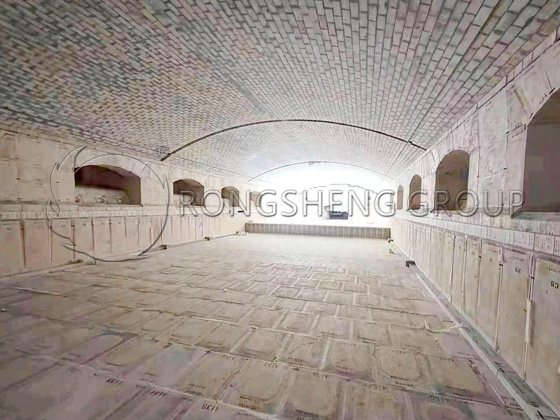
The rotary kiln body is the most critical component of the incineration system. As it is a piece of dynamic, rotating equipment, it places high demands on the design of the internal lining. It is essential to ensure the overall stability of the refractory lining during high-temperature, dynamic operation to prevent issues such as the detachment of refractory bricks.
In hazardous waste rotary kiln systems, the rotational speed is relatively low—typically less than 1 revolution per minute (rpm). Depending on facility design and energy-efficiency requirements, various lining structures can be selected, including single-layer brick, double-layer brick, composite brick, or monolithic castable linings. The total thickness of the refractory lining in a rotary kiln generally ranges from 250 mm to 300 mm. The material for the working layer (the innermost layer) is selected based on the operating temperature and the specific type of hazardous waste; options include high-alumina, corundum-mullite, or chrome-zirconium-corundum refractories.
When a single-layer structure (230–300 mm thick) is used, the high thermal conductivity of the refractory materials—often exceeding 1.7–2.0 W/(m·K)—can result in external kiln shell temperatures reaching over 350°C in high-temperature zones. However, this configuration offers excellent structural stability, making it well-suited for outdoor rotary kiln installations.
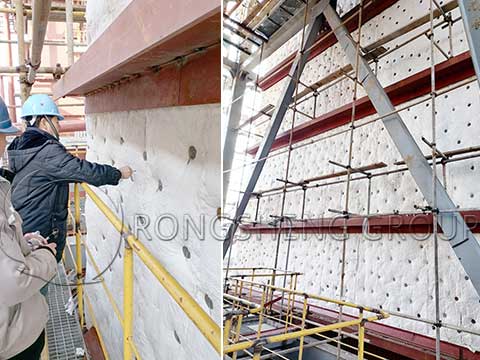
Alternatively, a double-layer structure consisting of insulating bricks and refractory bricks can be employed. Because insulating bricks have low thermal conductivity, they help reduce the temperature of the kiln shell, keeping the external surface temperature at or below approximately 220°C, which provides superior energy efficiency. This configuration, however, requires more rigorous construction standards and is best suited for indoor installations.
Secondary Combustion Chamber
The primary function of the secondary combustion chamber is to subject flue gas to secondary combustion, ensuring the incineration and decomposition of combustible components, fly ash particles, and substances such as dioxins. This process involves both physical and chemical reactions, which occur quite vigorously. The secondary combustion chamber typically incorporates refractory materials, thermal insulation materials, and thermal barrier (adiabatic) materials. Refractory materials—such as heavy-duty castables, moldable refractories, or firebricks—form the working lining. Thermal insulation materials include insulating castables and insulating bricks, while thermal barrier materials consist of products like calcium silicate boards, ceramic fiber boards, and nano-insulation boards.
Other Components
In the waste heat boiler section, wear-resistant castables are primarily required for components such as ash hoppers, headers, top seals, and outlet flues. Ash hoppers, in particular, often utilize a dual-layer lining consisting of a thermal barrier material and a wear-resistant castable, with a total thickness typically ranging from 200 to 250 mm.
For the quenching tower, acid-resistant castables or acid-resistant mortars are used. In the upper section—extending approximately 2 meters downward from the top—where temperatures are higher, a 25 mm layer of thermal barrier material can be applied as an insulating layer, with a total lining thickness of 100 mm being sufficient.