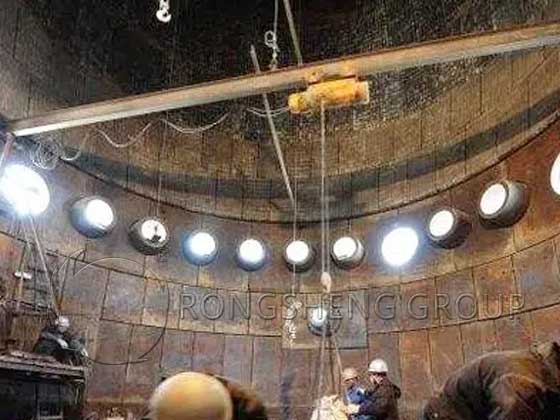
Silicon carbide (SiC), also known as corundum, is rarely found naturally; industrially used silicon carbide is all synthetically produced.
Pure silicon carbide is a colorless, transparent crystal. However, industrially produced silicon carbide, due to impurities such as free carbon, iron, and silicon, exhibits various colors, including yellow, black, dark green, and light green, with transparency varying depending on its purity. Industrial silicon carbide produced using the redox method has a purity range of 90% to 99.5%. 99.8% pure silicon carbide is pale green; as purity decreases to 99%, its color turns dark green, and when purity drops to 98.5%, it becomes black.
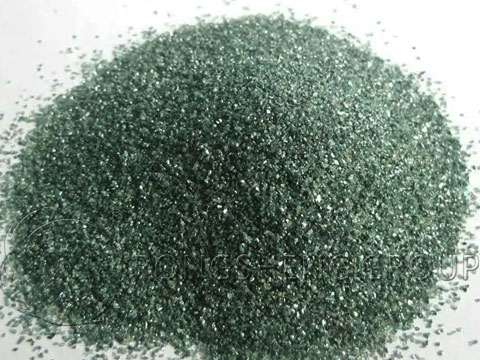
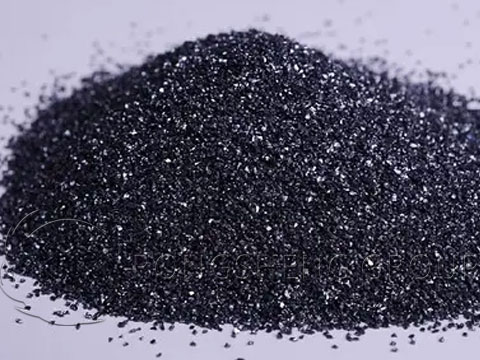
Silicon carbide has two crystal forms: β-SiC, a low-temperature form with a cubic structure, and α-SiC, a high-temperature form with a hexagonal structure. Its true density is 3.21 g/cm³, and its decomposition (sublimation) temperature is 2600℃. It is a hard material with a Mohs hardness of 9.2. SiC has a low coefficient of thermal expansion; its average coefficient of thermal expansion is 4.4 × 10⁻⁶/℃ in the range of 25℃ to 1400℃.
Performance of Silicon Carbide
SiC has a very high thermal conductivity (58.6 W/m·K). Due to differences in measurement methods and the porosity and pore shape of the tested samples, the values in the literature are not entirely consistent. Generally, the higher the SiC content and the lower the temperature, the greater the thermal conductivity. The low coefficient of thermal expansion and high thermal conductivity give SiC refractory materials good thermal shock stability.
At low temperatures, SiC is chemically stable and has excellent abrasion resistance, remaining unaffected by boiling hydrochloric acid, sulfuric acid, and hydrofluoric acid. However, at high temperatures, it can react with certain metals, salts, and gases. SiC remains stable in a reducing atmosphere up to 2600℃, but it undergoes oxidation in a high-temperature oxidizing atmosphere:
SiC + 2O2 → SiO2 + CO2 (1)
Furthermore, SiC is a non-oxide material with extremely strong covalent bonds, resulting in poor sintering properties with oxides. SiC is widely used as a high-performance refractory material or as an additive to improve the performance of refractory materials, especially slag resistance and thermal shock stability, due to its advantages such as small coefficient of thermal expansion, high thermal conductivity, high high-temperature strength, good slag resistance, and ability to form a protective oxide layer.
Applications of Silicon Carbide (SiC) in Shaped Refractory Materials
In shaped refractories, SiC can be used as a main component to produce silicon carbide refractory products, or as an additive to produce semi-SiC products.
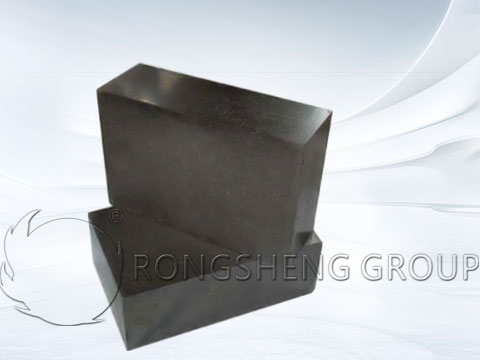
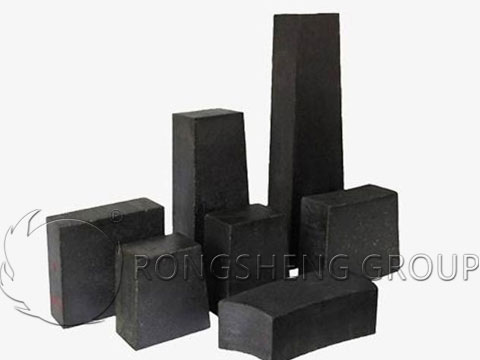
SiC-based refractories refer to high-grade refractories with SiC as the main component, produced by firing industrial SiC as raw material; they are also called SiC products. SiC products can be classified according to SiC content, type of binder, and amount added. The performance of the material largely depends on the bonding state between SiC particles, so SiC products are usually classified according to the type of bonding phase. Based on the different bonding phases, SiC products can be divided into: oxide-bonded SiC, nitride-bonded SiC, self-bonded SiC, and silicon-infiltrating reaction-sintered SiC, etc.
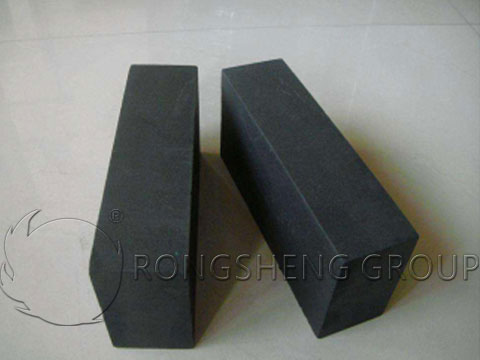
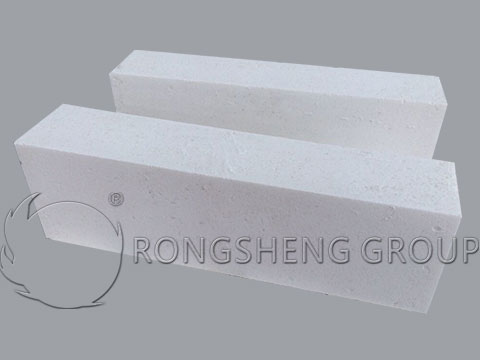
Semi-SiC products are SiC-containing refractories with SiC as a minor or auxiliary component. According to their material composition, they can be divided into clay clinker silicon carbide refractory products, high-alumina silicon carbide refractory products, and corundum silicon carbide refractory products, etc. Because these products contain SiC, their thermal shock resistance, thermal conductivity, and strength are significantly improved. Adding a small amount of SiC to clay clinker SiC products significantly improves their thermal shock stability, and the thermal shock stability gradually increases with the increase of SiC fine powder content in the ingredients. Adding an appropriate amount of SiC (optimal addition is 30%) and a suitable amount of phosphoric acid to high-alumina silicon carbide refractory products results in products with high thermal shock stability, good thermal conductivity, and relatively high strength. Adding a small amount of SiC fine powder to corundum silicon carbide refractory products significantly improves their thermal shock stability; the thermal shock stability increases systematically with the increase of SiC fine powder content. For example, using brown corundum as aggregate, adding 10% SiC fine powder, and using phosphoric acid as a binder, followed by high-pressure forming and heat treatment at 1450℃, produces slide rail bricks for steel rolling heating furnaces, which have shown good application results.
Applications of Silicon Carbide (SiC) in Unshaped Refractories
In unshaped refractories, SiC can be used as a main component in SiC-based castables, or as an additive to improve the performance of other castables, especially slag resistance and thermal shock stability. Research on the performance improvement of castables with SiC mainly focuses on corundum-based castables and high-alumina castables.
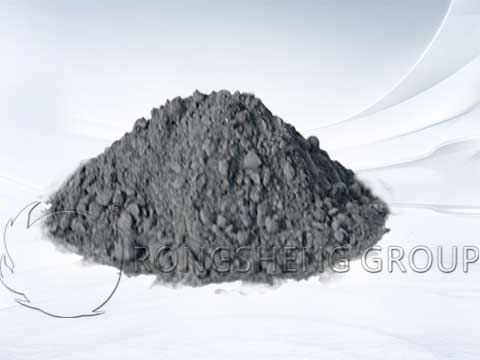
An Al2O3-SiC-C self-flowing castable for blast furnace tapping troughs exhibits high strength, good erosion resistance, high iron throughput, and good thermal shock resistance and oxidation resistance. For the operating conditions of tapping troughs in large and medium-sized blast furnaces, the structure and performance of traditional tapping trough castables were optimized, with a focus on the effects of silicon carbide addition, water-reducing agents, and medium-temperature sintering agents on the castable’s performance. Based on this, a castable with excellent medium- and high-temperature performance was successfully developed, achieving a single iron throughput of 100,000 tons in a 1050m³ blast furnace, demonstrating good performance. The most common application of SiC in monolithic refractories is in the working lining of blast furnace tapholes, a field with over 20 years of proven effectiveness. Currently, larger blast furnaces generally use Al2O3-SiC-C castables, significantly extending the service life of the tapholes. Furthermore, SiC-containing monolithic refractories are widely used in the steel industry for hot metal pretreatment linings, cupola and induction furnace linings; combustion chamber sidewall linings and boiler tube protection linings in waste incinerators; cement kiln preheater linings in the cement industry; cyclone separator linings in thermal power plants; combustion chambers, linings, and high-temperature separators in circulating fluidized bed furnaces; and kiln roof plates, silicon tapping ports, and aluminum tapping ports in the ceramics industry.
Studies on the effects of SiC addition (0%, 2%, 4%, 6%, and 8%) on the high-temperature strength and thermal shock stability of bauxite-based castables indicate that adding SiC (4-16%) is beneficial for improving the high-temperature strength and thermal shock stability of the castables. To improve the sintering physical and refractory properties of high-alumina castables, the effects of SiC addition (0%, 2%, 4%, 6%, and 8%) on the properties of high-alumina castables were investigated. The results showed that increasing the SiC content improved the sintering, physical, and refractory properties of high-alumina castables, but negatively impacted the strength of the semi-finished product. The study found that adding 6% 150-mesh SiC to the castable matrix improved the thermal shock resistance of the refractory castable.
In summary, the addition of SiC can improve the high-temperature strength and thermal shock stability of Al2O3-SiO2 castables. However, research on the resistance of SiC to lead slag erosion has not yet been reported.
SiC, as a non-oxide, has wide applications in many fields, mainly because it can form a dense SiO2 protective film on its surface, resulting in good oxidation resistance. However, SiC is thermodynamically very reactive with oxygen in the air. In practical applications, especially under high temperature, low oxygen pressure, and prolonged exposure, the oxidation rate of SiC is very fast. Therefore, since the 1960s, numerous scholars at home and abroad have conducted extensive and long-term research on the oxidation problem of SiC.
Through the study of the microstructure of the high-temperature oxide layer on the surface of SiC, it was found that the oxide layer formed on SiC materials in the range of 1040~1560℃ has the following characteristics influencing its high-temperature oxidation resistance:
- 1) Below 1360℃, the oxide layer formed on the surface of SiC particles is very thin, the microstructure does not change significantly, the oxidation resistance is good, and it is in a stable oxidation resistance stage.
- 2) Above 1360℃, the oxide layer thickness on the SiC surface increases significantly with increasing temperature. The formed oxide layer contains many pores, but due to the gradual increase in oxide layer thickness, SiC still exhibits sufficiently high oxidation resistance. This stage is the transition stage.
- 3) Above 1520℃, the oxide layer thickness is large and the outer surface is relatively flat. However, the strong flowability of molten SiO2 causes the oxide layer to thin at the edges of SiC particles. Gases from the SiC oxidation reaction can easily escape through these pores, forming channels for oxygen entry and accelerating the oxidation rate of SiC. This stage is the rapid oxidation stage.
- 4) There is no obvious transition region between the SiO2 layer formed on the surface and the SiC substrate.
Applications of Silicon Carbide Refractory Materials
Silicon carbide can be used in steelmaking as a special refractory material for severely eroded and corroded parts such as blast furnaces and blast furnaces. In the ceramics and electronics industries, it is widely used for kiln shelves, gates, and muffle furnace linings. In non-ferrous metal (zinc, aluminum, copper) smelting, it is used for molten metal conveying pipelines, smelting furnace linings, crucibles, and filters. In the chemical industry, it is used for desulfurization furnace linings and petroleum gasifiers.
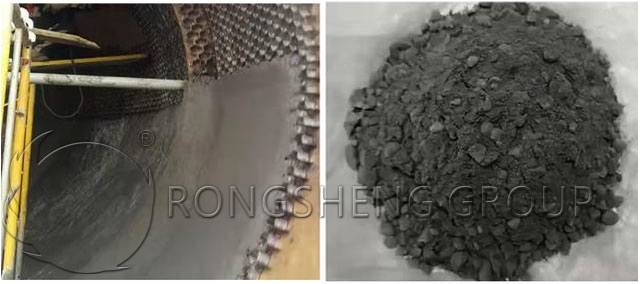
The impact of silicon carbide on the properties of aluminosilicate silicon carbide refractories lies primarily in its ability to significantly improve thermal shock stability, load softening temperature, wear resistance, and corrosion resistance, resulting in new refractory materials with excellent comprehensive performance. The SiO2 produced after silicon carbide oxidation can react with Al2O3 to form mullite, accompanied by significant volume expansion. Therefore, adding an appropriate amount of silicon carbide helps compensate for reheat shrinkage, improving the material’s creep resistance and load softening temperature. Because silicon carbide itself has high thermal conductivity, its addition to aluminosilicate refractories improves their thermal conductivity. Furthermore, the coefficients of thermal expansion of silicon carbide and mullite are very similar. This reduces the internal thermal stress during rapid temperature changes, resulting in significantly improved thermal shock resistance.
Additionally, silicon carbide oxidation can enhance the material’s erosion resistance. Specifically, the SiC on the material surface oxidizes to form SiO2, blocking the pores and reducing the internal atmosphere. Then, the activated SiC inside the material oxidizes, forming SiO gas, which diffuses to the refractory interface and re-oxidizes back to SiO2. The newly formed SiO2 combines with foreign substances to form a high-viscosity glassy phase, further blocking pores, slowing erosion, and extending the material’s lifespan.